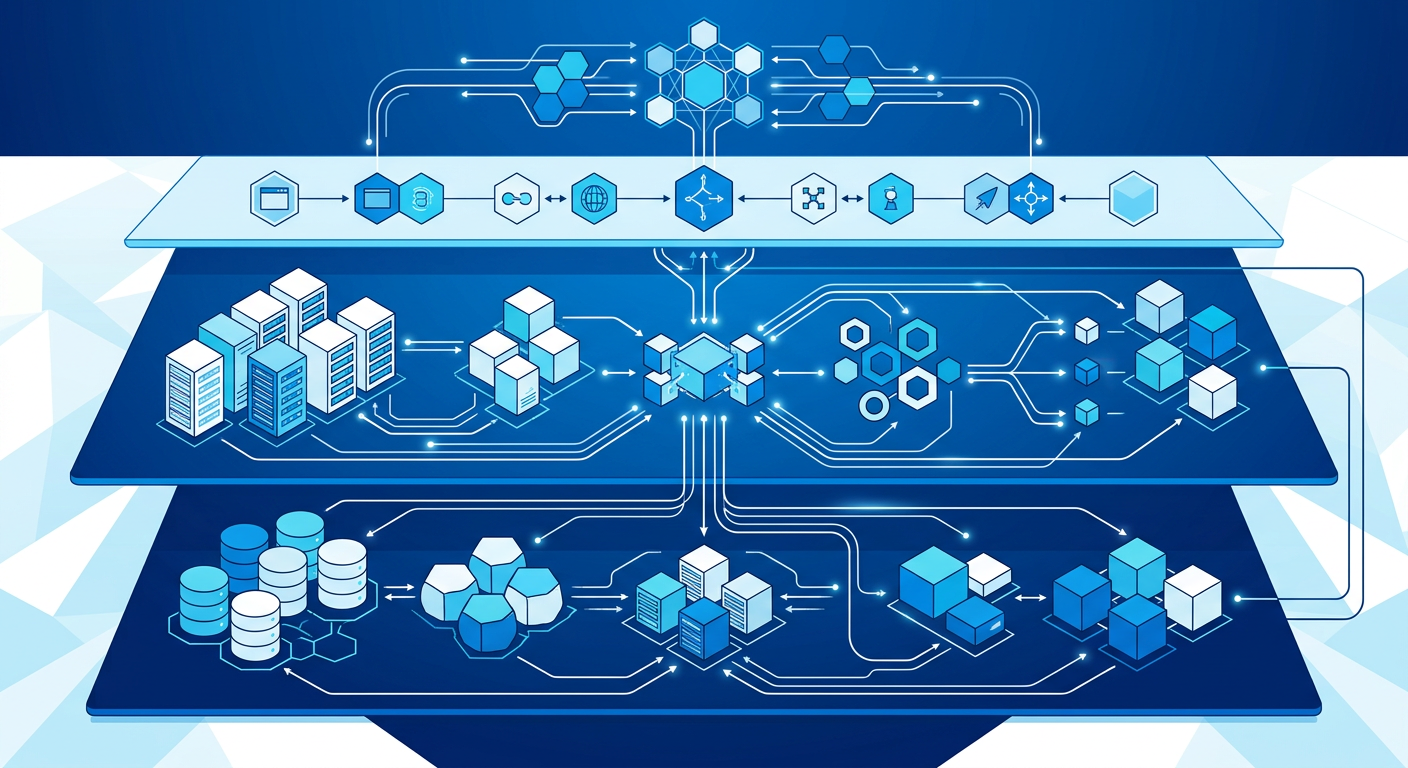
When Canadian businesses ask about automation that respects privacy laws and keeps data sovereign, they're really asking: "What does this actually look like in practice?" It's one thing to talk about privacy-first automation architecture in theory, but quite another to see the concrete components, understand how they connect, and recognize why each piece matters for compliance and control. This is the technical reality behind a Canadian-hosted automation stack—the actual infrastructure that runs automation workflows on servers in Canadian data centres, designed to keep sensitive business data in Canada when required.
The Foundation: n8n Self-Hosted in Canada
At the core of a privacy-respecting Canadian automation stack sits n8n, deployed on Canadian cloud infrastructure. Unlike cloud-hosted automation platforms where your workflows and data pass through foreign servers, n8n self-hosted Canada means the entire automation engine runs on infrastructure you control, within Canadian data centres.
If you set this up yourself, you can choose from options such as OVHcloud's Canadian region, DigitalOcean's Toronto data centre, or AWS's Canada (Central) region. At Integratie, we run our own workflows on ThinkOn, a Canadian-owned provider with Canadian data centres. The n8n instance itself requires relatively modest resources—a virtual machine with 2-4 GB RAM and 2 vCPUs handles most small-to-medium business workloads comfortably.
What makes this foundation critical is execution context. When your automation workflows run, they process sensitive data: customer information, financial records, health data, or proprietary business intelligence. With n8n running on servers in Canada, that processing happens in Canada, and data only goes to a US or EU service if a workflow step is built to send it there. The workflow definitions, execution history, credentials, and temporary data are kept on your own infrastructure.
The Self-Hosted Services Layer
A complete Canadian-hosted automation stack extends beyond just the automation engine. The most powerful implementations include complementary self-hosted services that eliminate dependencies on foreign SaaS platforms:
Database Layer: PostgreSQL or MySQL instances running alongside n8n store structured data from your workflows. A healthcare clinic might collect patient intake form responses here, a manufacturing company might aggregate equipment sensor data, or a professional services firm might build a client interaction database. These databases live on the same Canadian infrastructure, accessed only by your automation workflows and authorized applications.
File Storage: MinIO or similar S3-compatible object storage provides a Canadian alternative to services like Dropbox or Google Drive. Your automation workflows can store documents, process uploaded files, generate reports, and manage media, with the files kept on your own servers in Canada. A legal firm processing client documents, for instance, can ingest files through automated workflows, apply transformations, and store results entirely within this controlled environment.
Authentication Services: Rather than relying on third-party authentication that creates external dependencies, self-hosted solutions like Authentik or Keycloak provide user management and single sign-on. This means access logs, authentication attempts, and user permissions remain under your operational control—critical for security audits and compliance reporting.
Communication Tools: Self-hosted alternatives to Slack (Mattermost) or email services (Mailcow) can integrate directly with your automation workflows, ensuring internal communications triggered by automated processes don't create unexpected data flows to foreign jurisdictions.
The Canadian Cloud Hosting Architecture
The infrastructure choices matter significantly for both performance and compliance. A typical production-grade Canadian-hosted automation stack architecture looks like this:
Compute Layer: Virtual machines or containers running in Toronto, Montreal, or Vancouver data centres. Keeping compute in Canada also keeps latency low for Canadian users.
Network Security: A virtual private cloud (VPC) configuration isolates your automation infrastructure from public internet traffic. Only specific entry points—a VPN gateway for administrative access, API endpoints for authorized integrations—can reach your n8n instance and supporting services. All inter-service communication happens within the private network.
Load Balancing and Scaling: As automation workflows grow in complexity and volume, Canadian cloud providers offer load balancers and auto-scaling groups that maintain performance without manual intervention. A retail business running hourly inventory synchronization across 50 locations, for example, can scale compute resources during peak processing times and reduce capacity overnight.
Logging, Monitoring, and Audit Trails
Privacy-first automation architecture isn't just about where data lives—it's about visibility into what happens to that data. A complete Canadian stack includes comprehensive logging infrastructure:
Centralized Log Management: Tools like Graylog or ELK Stack (Elasticsearch, Logstash, Kibana) aggregate logs from n8n, databases, application servers, and network devices into a searchable, analyzable repository. When you need to show what happened to personal information under PIPEDA or BC's PIPA, these logs give you an evidence trail.
Workflow Execution History: n8n maintains detailed execution logs showing exactly which workflows ran, when they ran, what data they processed, and whether they succeeded or failed. For a financial services company, this creates the audit trail proving that client data processing followed defined procedures and occurred within authorized timeframes.
Security Event Monitoring: Intrusion detection systems and security information and event management (SIEM) tools watch for anomalous access patterns, failed authentication attempts, or unusual data transfer volumes. These alerts help you respond to potential security incidents before they become breaches.
Performance Metrics: Monitoring tools track resource utilization, response times, and workflow execution duration. This operational visibility helps you optimize performance and catch problems—like a workflow that suddenly starts taking much longer than usual, possibly indicating a data quality issue or integration problem—before they impact business operations.
Example Scenario: Healthcare Clinic Automation
Example scenario: a multi-location healthcare clinic sets up a Canadian-hosted automation stack. The architecture includes:
- n8n running in a Canadian data centre
- PostgreSQL database storing patient appointment data and clinical notes
- MinIO object storage for medical imaging and patient documents
- Authentik for staff authentication and role-based access control
- Graylog for centralized logging and privacy reporting
The workflows automate appointment reminders via SMS, synchronize patient records between the practice management system and billing software, generate daily census reports for each location, and flag overdue follow-ups for clinical staff. The workflows run on self-hosted servers in Canadian data centres and can be designed to keep sensitive patient data in Canada when required, and the logs give the clinic a clear record of how personal information was handled.
To judge the cost, add up the monthly infrastructure charges for a stack like this and compare them with what equivalent SaaS automation tools would charge. Many of those tools bill per user or per task, so the comparison changes as your volume grows.
See an example architecture designed for your business. Integratie designs and implements Canadian-hosted automation infrastructure tailored to your compliance requirements, technical constraints, and business processes. Let's discuss what a privacy-first automation stack would look like for your organization.