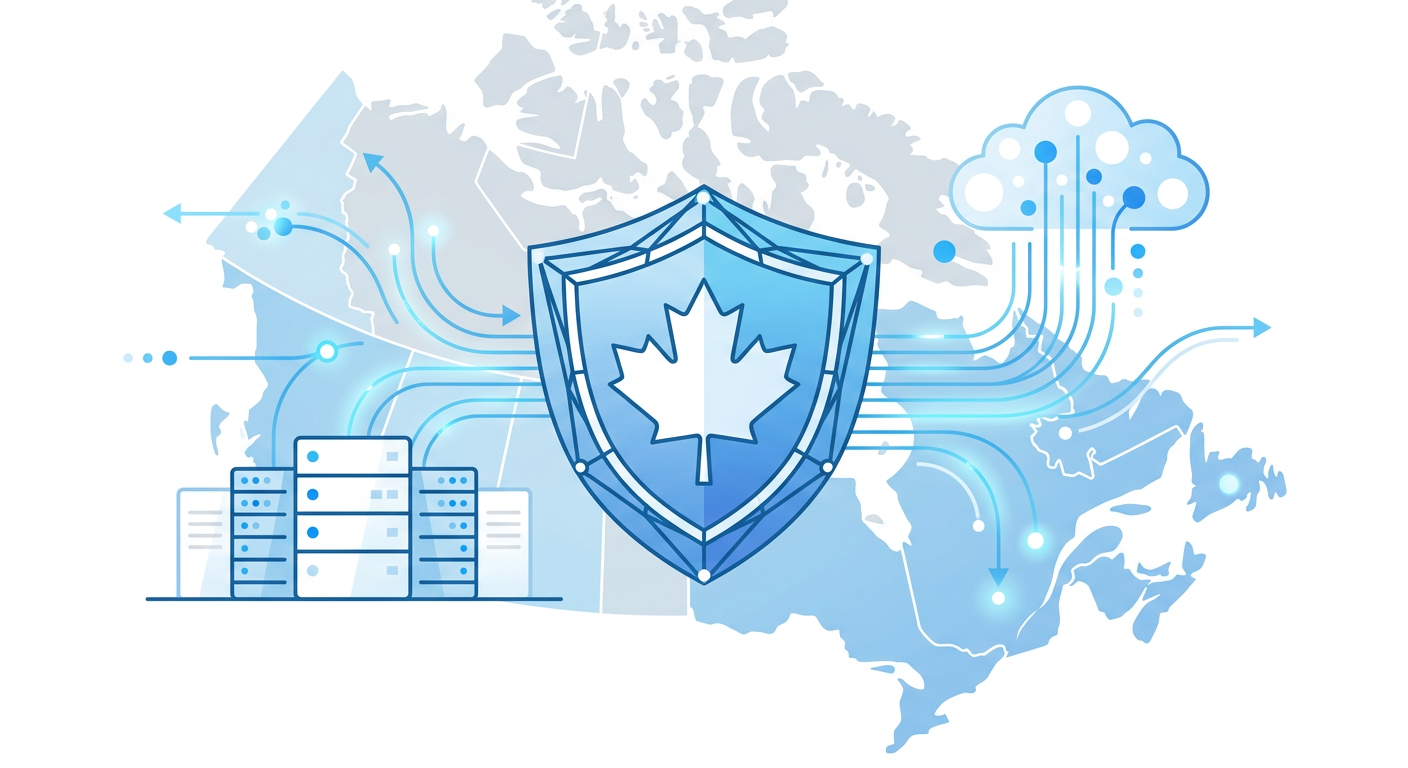
When Canadian businesses implement workflow automation, they rarely question where their data actually lives. That SaaS tool with the slick interface? The automation platform processing your customer information? Chances are, your sensitive business data is stored on U.S. servers—and that creates risks most organizations don't discover until it's too late. From legal compliance vulnerabilities to privacy breaches, U.S.-hosted automation tools expose Canadian companies to challenges that could have been avoided by paying closer attention to where their data is stored and who controls it.
The Legal Landscape: Why Location Matters More Than You Think
The risks of U.S. cloud tools aren't theoretical—they're rooted in fundamental differences between Canadian and American legal frameworks. The U.S. CLOUD Act (Clarifying Lawful Overseas Use of Data Act) grants American law enforcement agencies the authority to compel U.S.-based service providers to produce data stored anywhere in the world, regardless of where that data originates or who owns it.
For Canadian businesses, this means your customer data, financial records, and proprietary business information could be accessed by foreign authorities without your knowledge or consent, even if that data never physically left Canada in your mind. Canadian privacy laws, including PIPEDA (Personal Information Protection and Electronic Documents Act) and BC's PIPA (Personal Information Protection Act), don't require data to stay in Canada. But they do make your business accountable for what its vendors do with personal information, and they require appropriate safeguards to protect it.
Healthcare providers in Ontario, for example, must comply with PHIPA (Personal Health Information Protection Act), which sets strict rules about who can access patient data and holds the clinic responsible for the vendors that handle it. A medical clinic using U.S.-hosted automation tools to process appointment reminders or patient intake forms may not have checked whether those tools meet its obligations, which can lead to penalties and reputational damage.
Operational Risks Beyond Compliance
While legal compliance drives many conversations about Canadian data residency, the operational risks of U.S.-hosted tools extend further. Data transfer speeds, service reliability, and business continuity all suffer when your automation infrastructure sits thousands of kilometres away from your operations.
Example scenario: a financial services firm processes hundreds of loan applications a day through an automated workflow. If that workflow runs on U.S. servers, every API call, every data transformation, and every customer interaction must travel across international borders. This adds latency that slows processing times and creates potential points of failure. During cross-border network disruptions or geopolitical tensions, these dependencies become critical vulnerabilities.
Additionally, U.S. data centres operate under American regulations regarding data breach notifications, retention policies, and third-party access. When incidents occur, Canadian businesses may not receive timely notifications or may find themselves subject to disclosure requirements that conflict with their obligations to Canadian customers and regulators.
The Privacy Expectations of Canadian Customers
Canadian consumers increasingly understand and value data privacy. Many expect businesses to protect their personal information carefully. When customers learn their data is stored in U.S. facilities subject to foreign surveillance laws, trust erodes quickly.
This matters particularly for businesses in sensitive sectors. Example scenario: an HR software company automates employee onboarding, payroll processing, and performance reviews, so it handles extremely sensitive personal information. If employees discover their compensation details, social insurance numbers, and performance data reside on U.S. servers, the company faces not just compliance questions but fundamental trust issues with its workforce.
Privacy-first workflow automation has evolved from a nice-to-have feature into a competitive differentiator. Organizations that can credibly demonstrate Canadian data residency gain advantages in RFP processes, client acquisition, and employee retention.
How Canadian-Hosted Automation Solves These Problems
Canadian-hosted automation addresses these risks at the source. When your workflows run on self-hosted servers in Canadian-owned data centres, a U.S. provider isn't holding your data, which reduces your exposure to foreign access requests. Automations can also be designed to keep sensitive business data in Canada when required, which makes it easier to show how you handle personal information under PIPEDA and BC's PIPA. And shorter distances mean less latency.
Example scenario: an e-commerce business automates order processing, inventory management, and customer service workflows. By choosing Canadian-hosted automation, it keeps customer purchase histories, payment information, and personal preferences on servers in Canada. If the Privacy Commissioner asks questions or customers exercise their rights under PIPEDA, the business can show where its data is stored and who handles it, without untangling complex cross-border data transfer agreements.
This approach particularly benefits organizations in regulated industries—healthcare, finance, legal services, and government contractors—where clients, regulators, and contracts often ask where data is stored. But even businesses without strict regulatory obligations benefit from the simplified compliance posture, reduced legal risk, and enhanced customer trust that Canadian-hosted solutions provide.
Making the Switch: What to Look for in Canadian Alternatives
Transitioning from U.S.-hosted tools to Canadian alternatives doesn't require abandoning functionality or user experience. Modern Canadian-hosted automation platforms offer the same powerful features—API integrations, workflow builders, conditional logic, and scheduling—while maintaining data residency within Canadian borders.
When evaluating options, verify that providers offer:
- Physical server locations in Canada: Confirm data centres are actually in Canadian provinces, not just "North America"
- Canadian business registration: Ensure the provider operates under Canadian corporate law
- Transparent data handling policies: Look for clear documentation about where data is stored and processed
- Compliance certifications: Check for adherence to Canadian privacy frameworks and industry-specific standards
- Data portability: Ensure you can export your data if requirements change
The transition process typically involves auditing current automation workflows, identifying data types being processed, mapping integrations, and methodically migrating workflows to Canadian infrastructure. While this requires planning, the risk reduction and compliance benefits far outweigh the temporary inconvenience.
Protect Your Business with True Data Sovereignty
The risks of U.S. cloud tools aren't going away—if anything, increasing geopolitical complexity and evolving privacy regulations make Canadian data residency more critical than ever. Businesses that proactively address these vulnerabilities position themselves for sustainable growth, regulatory compliance, and customer trust.
Your automation infrastructure shouldn't create legal exposure or operational dependencies that undermine your business. By choosing Canadian-hosted automation, you reduce these hidden risks while keeping the efficiency and scalability that modern organizations require.
Want to know where your workflow data would live? Our workflows run on self-hosted servers in Canadian-owned data centres, and we can design automations to keep sensitive business data in Canada when required. Book a 20-minute call and we'll walk you through it.