Every Monday morning, the same battle plays out in boardrooms across Canada. Sales reports one revenue number. Operations has a different figure. Finance is working with yet another dataset. Each team is confident they're right, and technically, they all are—they're just looking at different systems that haven't talked to each other since last week's manual update.
This isn't just frustrating. It's expensive. When your CRM shows one inventory level, your ERP shows another, and your billing system has a third version of the truth, decisions get delayed, customers get contradictory information, and teams waste hours reconciling spreadsheets instead of doing their actual jobs. The solution isn't better communication or more meetings—it's establishing a genuine single source of truth through intelligent CRM ERP integration that keeps every system synchronized in real-time.
Why Data Silos Create Organizational Conflict
The root of sales and operations friction isn't personality clashes or competing priorities—it's data inconsistency. When teams operate from different datasets, they're essentially working in parallel realities.
Example scenario: a manufacturing company where sales closes a deal based on inventory numbers pulled from the CRM on Tuesday morning. By Tuesday afternoon, operations has allocated that same inventory to fulfill a rush order for a long-standing client. Wednesday morning, the new customer receives a call explaining their order will be delayed by three weeks. Sales blames operations for poor communication. Operations blames sales for selling inventory that was already committed. The real culprit? Two systems that weren't talking to each other.
This scenario multiplies across pricing discrepancies, customer contact information, order status, payment terms, and dozens of other data points that should match across systems but rarely do. Each inconsistency erodes trust between departments and creates an environment where every meeting requires "getting on the same page" before any actual decisions can happen.
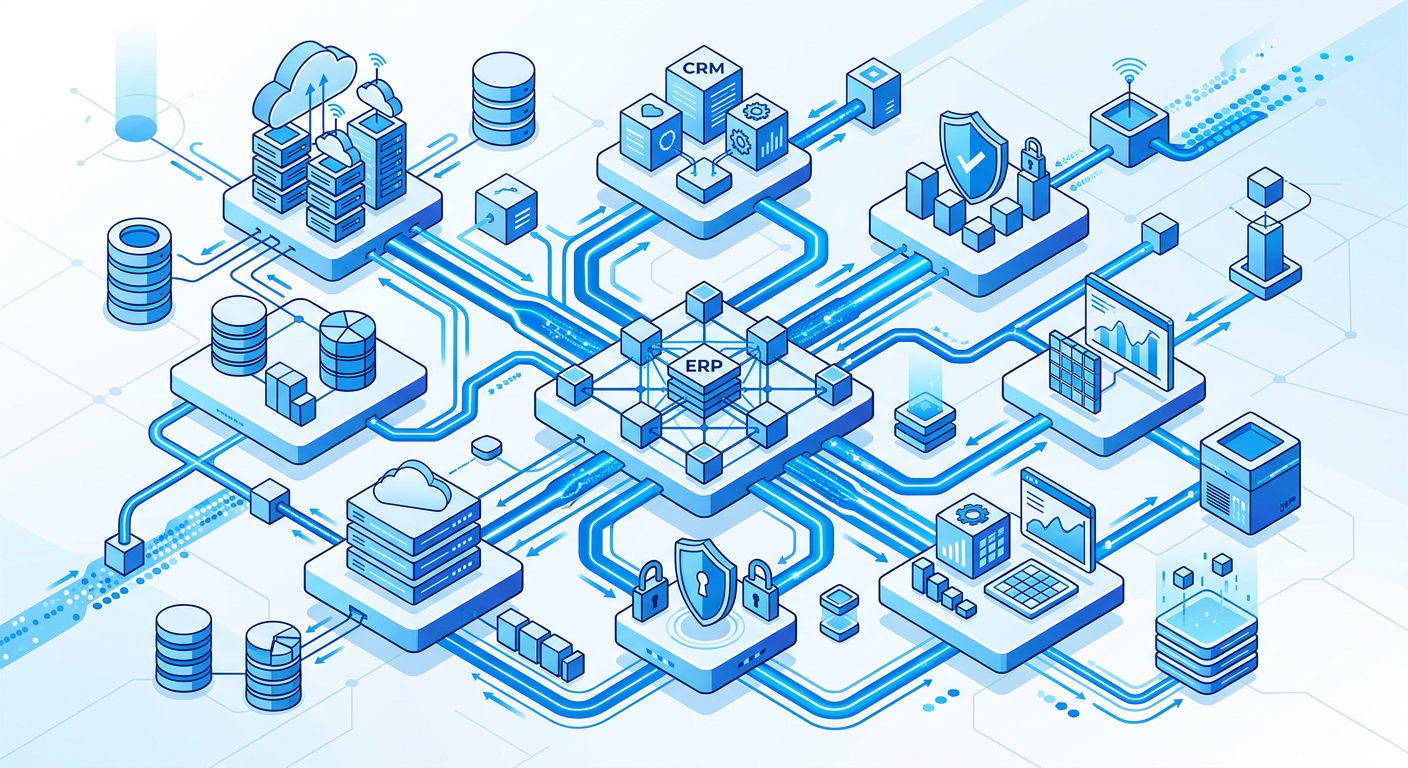
When you sync CRM and accounting systems alongside your ERP, you eliminate the gaps where conflicting information breeds. Data consistency workflows ensure that when a sale closes, inventory adjusts, when a payment posts, customer records update, and when operations schedules production, sales sees real-time status updates.
The Technical Reality of CRM ERP Integration
Creating a single source of truth doesn't mean forcing everyone to work in one massive system—it means ensuring that your specialized systems share data automatically.
Modern CRM ERP integration works through automated workflows that detect changes in one system and propagate relevant updates to others instantly. When a sales rep updates a customer's contact information in the CRM, that change flows automatically to the ERP, accounting software, and any other connected platform. When operations marks an order as shipped in the ERP, the CRM updates the deal status and triggers a customer notification.
The key is bidirectional synchronization with intelligent data mapping. Not every field in your CRM needs to appear in your ERP, and vice versa. Effective data consistency workflows identify which data points are shared across systems, establish clear rules about which system "owns" each data type, and create automated processes that keep everything aligned without human intervention.
Example scenario: a distribution company runs separate CRM, ERP and accounting systems. Once they're connected, sales reps see real-time inventory and fulfillment timelines. Operations gets complete customer history and preferences when processing orders. Finance spends far less time on manual reconciliation because transactions flow automatically from the ERP to accounting with the right categories and customer attribution.
Building Data Consistency Workflows That Actually Work
The technical integration is only half the battle. The other half is organizational: getting teams to agree on data standards, ownership, and processes.
Successful data consistency workflows start with a mapping session where sales, operations, and finance identify their critical data points and trace how information currently flows (or fails to flow) between systems. This reveals not just technical gaps but also process disagreements—like whether "deal closed" means contract signed or first payment received.
These conversations surface the implicit assumptions each department makes about data. Sales might consider a customer "active" if they've purchased within 12 months. Operations might use a 6-month window. Finance might flag accounts as inactive after 90 days of payment inactivity. Without alignment on these definitions, no amount of technical integration will create a true single source of truth.
Once definitions align, automation can enforce consistency. Workflow rules ensure that status changes happen according to agreed criteria across all systems simultaneously. When a customer meets the "inactive" threshold, their status updates everywhere at once—no department works with outdated categorizations.
Example scenario: a professional services firm finds that many of its sales and operations disputes come from different definitions of project status. Once status is synchronized across the CRM and the project management system, disputes get settled faster because both teams see the same information in real time.
The ROI of Synchronized Systems
The financial case for CRM ERP integration extends far beyond reduced interdepartmental friction, though that alone delivers measurable value in reduced meeting time and faster decision-making.
Synchronized systems dramatically improve cash flow management. When your CRM, ERP, and billing systems share data automatically, you can track the complete customer journey from initial quote through final payment without manual data entry. This visibility helps identify bottlenecks in your sales-to-cash cycle and enables proactive intervention when deals stall or payments delay.
Inventory optimization improves when sales has real-time ERP data. Reps can commit to realistic delivery dates, reducing the expediting costs and customer disappointment that come from overpromising. Operations can plan production and purchasing based on actual pipeline data rather than last week's forecast that's already outdated.
Customer experience benefits enormously when every team member works from the same data. A customer calling about an order gets consistent information whether they reach sales, operations, or customer service. Account managers can see complete payment history, support tickets, and fulfillment status without switching systems or sending "quick question" emails to other departments.
Example scenario: an industrial supplier's team spends 15 hours a week re-typing orders and customer updates from one system into another. Connecting the CRM and ERP gives those hours back. Over a 50-week year, that's 15 × 50 = 750 hours of manual data entry the team no longer does. Better inventory turns, faster quoting and fewer order errors add to that value.
Moving from Data Chaos to Clarity
Establishing a single source of truth requires both technical implementation and organizational commitment, but the alternative—continuing to operate with conflicting data across departments—carries costs that compound over time.
The transition starts with honest assessment of your current state. Map your critical data flows, identify where systems diverge, and quantify the time your team spends reconciling information or resolving conflicts caused by data inconsistency. This baseline helps measure improvement and builds the business case for integration investment.
Next, prioritize integration points based on business impact. You don't need to connect everything on day one. Start with the data flows that cause the most friction or carry the highest business risk—often customer information, inventory levels, and order status. Early wins build momentum and demonstrate value while you plan more comprehensive integration.
The technical work of connecting systems through APIs and automation platforms requires expertise but has become dramatically more accessible than even five years ago. Modern integration tools enable sophisticated data consistency workflows without extensive custom development, making CRM ERP integration feasible for mid-market Canadian businesses, not just enterprises with massive IT budgets.
Stop letting data inconsistency drive wedges between your teams. Book a 20-minute call and we'll look at your current systems with you, find the data flows that cause the most friction and point out quick wins. From there, we can design automation workflows that keep sales and operations working from the same data while each team keeps its own specialized tools.