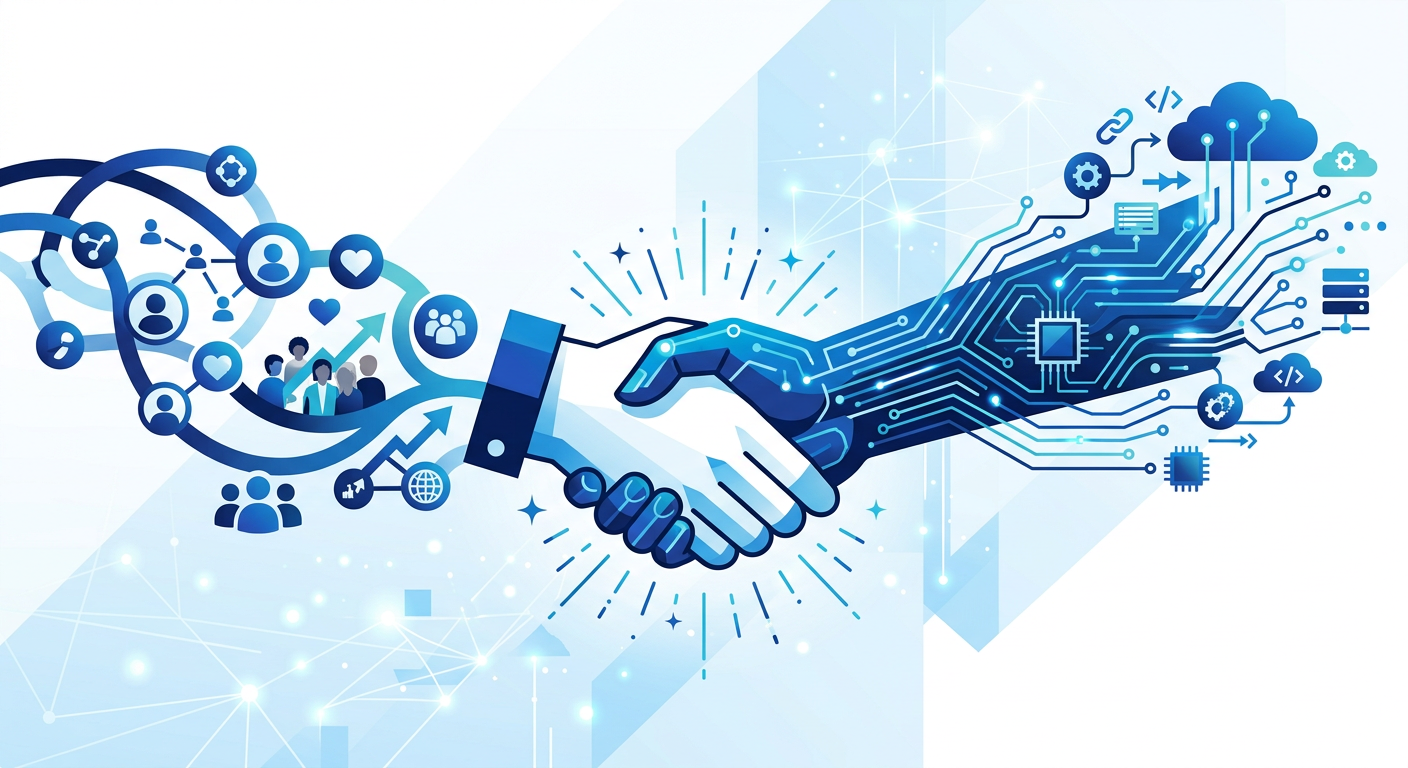
First impressions matter immensely in business. When a new customer signs up for your service or purchases your product, the first few interactions set the tone for your entire relationship. Yet many Canadian businesses struggle with a common dilemma: manual onboarding processes consume countless hours and lead to inconsistent experiences, but fully automated sequences feel cold and transactional. The solution isn't choosing between efficiency and warmth—it's designing customer onboarding automation that strategically combines both automated workflows and human touchpoints to create experiences that scale without sacrificing the personal connection your customers crave.
The Problem with All-or-Nothing Onboarding
Too many businesses approach onboarding as a binary choice. Either they manually handle every email, phone call, and task—which doesn't scale and leads to exhausted teams—or they set up completely automated sequences that fire off generic messages with no human intervention until something breaks. Neither extreme serves customers well.
Purely manual onboarding creates bottlenecks. When your customer success team spends hours on repetitive tasks like sending welcome emails, creating accounts, or scheduling initial calls, they have less time for the high-value conversations that actually build relationships. Inconsistencies creep in as different team members follow slightly different processes, and new customers might wait days for responses that should be immediate.
On the flip side, over-automation creates its own problems. Customers can tell when they're receiving templated communications with no consideration for their specific situation. When welcome email workflows fire without regard for customer behaviour or context, they feel spammy rather than helpful. And when problems arise, customers stuck in automated sequences with no human oversight can quickly become frustrated and churn.
Designing Human-Centred Automation
The key is implementing what we call human-centred automation—systems that automate onboarding tasks intelligently while preserving space for meaningful human interaction. This approach recognizes that some tasks are perfect for automation (data entry, account provisioning, sending informational resources) while others benefit enormously from a personal touch (answering specific questions, providing strategic advice, building rapport).
Start by mapping your current onboarding process from end to end. Document every email sent, every task completed, every piece of information collected. Then categorize each step: Which actions are purely administrative? Which require judgment or personalization? Which represent relationship-building opportunities?
Administrative tasks are your first automation candidates. Setting up user accounts, sending confirmation emails, provisioning access to tools, creating customer records in your CRM—these should happen instantly and flawlessly without human intervention. Customers expect this level of efficiency, and your team shouldn't waste time on work that systems can handle perfectly.
Information delivery is your second opportunity. New customers need to learn about your product, understand key features, and access resources. Welcome email workflows can deliver this content on an intelligent schedule based on customer actions and profile data. But here's the crucial distinction: these emails should feel helpful, not promotional. They should respond to what the customer has actually done, not just blast information on a predetermined timeline.
Strategic Human Touchpoints
Once you've automated the routine tasks, you can design intentional moments for human connection. Example scenario: a software company's customer onboarding automation handles account creation, sends a personalized welcome email based on the customer's industry, and delivers a series of educational resources over the first week. But on day three, the system automatically creates a task for an onboarding specialist to send a personal video message addressing the specific use case the customer mentioned during signup.
This hybrid approach means customers get immediate, consistent automated responses for routine matters, but they also receive timely, relevant human outreach that acknowledges their unique situation. The automation doesn't replace human connection—it creates the space and context for better human connection.
Consider building triggers for human intervention based on customer behaviour. If someone hasn't logged in after three days, automate onboarding tasks like sending a helpful resource, but also create a task for your team to make a personal check-in call. If a customer is rapidly adopting features, have your system flag them for a proactive conversation about advanced capabilities. If someone seems stuck, trigger both automated help content and human outreach.
Building Workflows That Feel Personal
The secret to customer onboarding automation that doesn't feel robotic lies in the details. Use the data you collect to personalize communications in meaningful ways—not just inserting a first name, but referencing the specific problems they told you they're trying to solve, the industry they work in, or the features they've shown interest in.
Timing matters enormously. Instead of sending emails based solely on calendar days since signup, trigger communications based on customer actions. Send the "next steps" email after they complete the initial setup, not on an arbitrary schedule. Deliver advanced feature tutorials after they've mastered the basics, not before they're ready.
Give customers control over their experience. Let them choose their communication preferences, skip steps they don't need, or request human help at any point. Welcome email workflows should include clear options to speak with a real person, not trap customers in an automated maze.
Example scenario: a consulting firm uses customer onboarding automation for its discovery process. When a new client signs an engagement letter, the system automatically sends a welcome package, schedules the kickoff meeting based on both parties' calendar availability, requests preliminary documents through a branded portal, and creates a project in the firm's management system. But it also immediately notifies the lead consultant, who records a 60-second personal welcome video acknowledging the client's specific goals. The automation handles logistics flawlessly, while the human touch makes clients feel valued from day one.
Measuring Success Beyond Efficiency
When evaluating your onboarding automation, look beyond simple efficiency metrics. Yes, you should track time saved and tasks automated, but also measure the quality of customer relationships you're building. Monitor engagement rates with your automated content—are customers actually opening those emails and clicking those links? Track time-to-value metrics—how quickly do customers achieve their first win with your product? Survey customers about their onboarding experience specifically.
Most importantly, track early-stage retention and expansion. The ultimate test of your onboarding process isn't whether it's efficient—it's whether it successfully launches customers into long-term, growing relationships with your business. Human-centred automation should improve both your team's capacity and your customers' success.
The businesses winning with customer onboarding automation aren't choosing between efficiency and empathy. They're strategically combining automated workflows with intentional human touchpoints to create experiences that scale beautifully while still making every customer feel seen, understood, and valued. That's not just good automation—it's good business.
Ready to design an onboarding experience that's both efficient and genuinely welcoming? Book a 20-minute call and we'll help you map your current process, identify the right balance of automation and human touchpoints, and build workflows that make every new customer feel like your only customer.